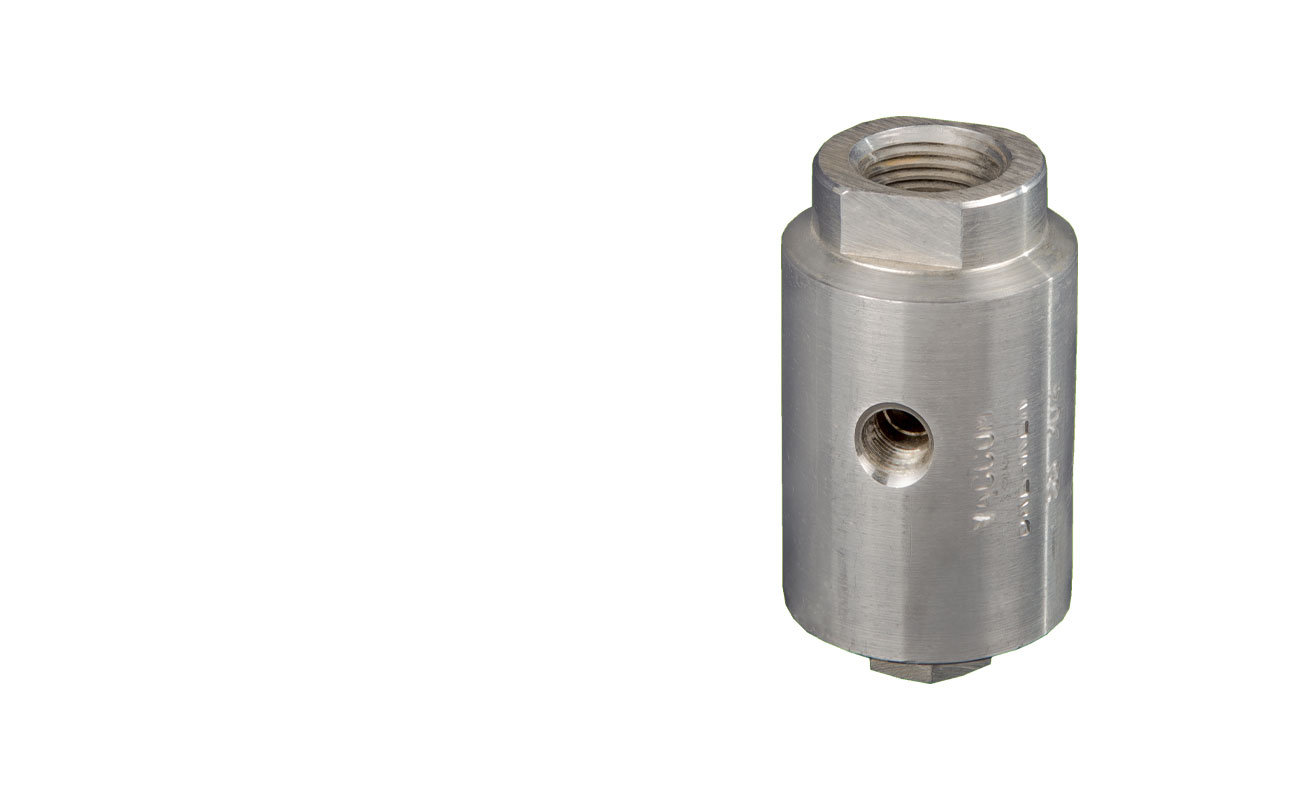
Vacuum Breaker
Safeguards steam and condensate systems from vacuum collapse and associated damage
Submit your enquiryA Vacuum Breaker is a vital safety and operational device designed to automatically admit atmospheric air (or inert gas) into a steam or condensate system when the pressure inside drops below atmospheric pressure, preventing vacuum formation and potential system collapse.
It protects equipment from damage due to differential pressure, ensures proper drainage, and facilitates efficient operation, particularly during system shutdowns or cooling. When steam systems cool down, or when condensate is rapidly discharged from a process, the steam inside can condense, creating a vacuum (pressure below atmospheric). This vacuum can cause severe damage, such as the collapse of heat exchangers, process vessels, or even sections of piping. Vacuum Breakers are simple, automatic valves that open when a vacuum begins to form, allowing air to enter and break the vacuum. This equalises the pressure inside the system with the atmosphere, preventing damage and enabling proper drainage of condensate. They are indispensable for the safe and efficient operation of systems that experience pressure drops below atmospheric.
Key Industries/Applications:
- Industries: All industries utilising steam, especially those with batch processes, long steam mains, or jacketed vessels
- Applications:
- Heat exchangers, reboilers, evaporators, and plate heat exchangers to prevent collapse during shutdown or rapid cooling
- Steam mains, headers, and branch lines to prevent vacuum formation upon shutdown or during periods of low load
- Jacketed vessels and drying cylinders
- Condensate return lines where vacuum can impede flow
- Any equipment or piping susceptible to vacuum collapse
Technical data
- Product capacity / performance range: Available in various sizes and cracking pressures (the vacuum level at which it opens) to suit different system volumes and vacuum tendencies, and is designed for rapid, automatic air admission
- Compliance or standards: Manufactured to relevant international standards for pressure accessories and safety devices, ensuring reliable performance and system protection
- Design, flexibility or customisation:
- Operating mechanism: Typically spring-loaded disc or ball type
- Body materials: Available in bronze, stainless steel, or carbon steel for durability and compatibility
- Connections: Screwed or flanged connections
- Optional features: May include an integral check valve to prevent reverse flow of process fluid, or a manual override
- Settings: Fixed or adjustable vacuum-breaking points
Product features