
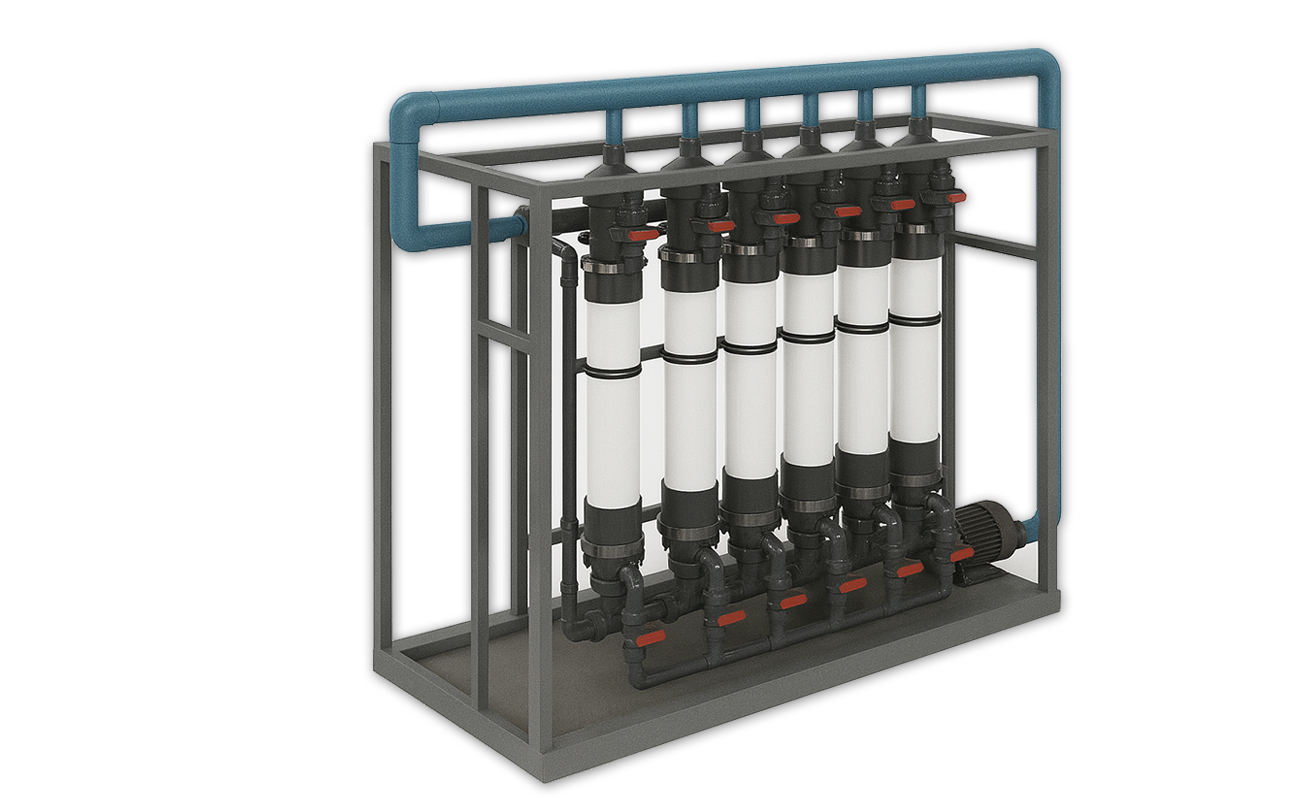
Ultrafiltration
Compact, modular UF systems that efficiently remove turbidity, bacteria, and high-molecular contaminants
Submit your enquiryUltrafiltration (UF) is a membrane-based water treatment process that uses hollow fibre or spiral-wound membranes with pore sizes typically 0.01–0.1 microns.
It removes suspended solids, bacteria, viruses, and high-molecular-weight organics from water.
Salient features
- Removes turbidity, bacteria, and some viruses
- Pore size ~0.01 microns
- Operates at low pressure
- Provides consistent filtrate quality
- Compact and modular system design
- Often used as pre-treatment for RO systems or direct filtration
Products

Desalination
Engineered desalination systems ensuring dependable freshwater production for industrial and municipal applications
Salient Features
- Converts seawater/brackish water into freshwater
- Common methods: RO and thermal distillation
- Removes salts, minerals, and impurities
- Ensures a reliable water supply
- Scalable for industrial, municipal, or drinking water use
 Discover more
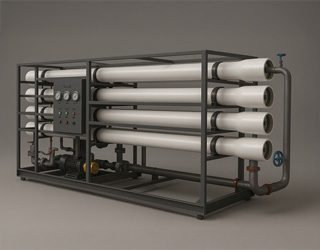
Sea Water Reverse Osmosis (SWRO)
Advanced membrane systems designed to handle high salinity and deliver consistent freshwater performance.
Salient Features
- Handles feed salinity up to 40,000 ppm TDS
- Utilises energy-efficient high-pressure pumps and energy recovery devices
- Removes ≥ 99 % of dissolved salts.
- Modular skids allow scalable capacity from small resorts to large municipal plants
- Corrosion-resistant materials (e.g., duplex/Super Duplex SS) for marine conditions
- Includes multi-stage pre-treatment (DMF/UF) and post-treatment remineralisation or disinfection
Discover more
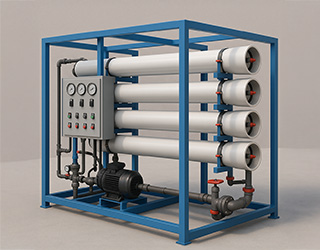
Brackish Water Reverse Osmosis (BWRO)
Engineered to transform brackish water into pure, usable freshwater through efficient membrane technologies
Salient Features
- Treats moderately saline water (TDS 1,000–10,000 ppm)
- Operates at lower pressure than seawater RO (typically 10–30 bar)
- Removes salts, heavy metals, bacteria, and organics
- Energy-efficient and cost-effective
- Modular, compact system design
- Ideal for inland, industrial, and municipal applications
Discover more